






Most laptop damage does not happen in dramatic drops. It happens in small ones: the bag swung onto a train seat, the corner that catches a desk leg, the sleeve that lets a machine slide when the bag is set down. A good laptop backpack is designed around those moments, and you can identify one by looking at five specific areas.
1. Suspended, not resting, sleeves
The single most important feature is a sleeve that keeps the laptop off the bottom of the bag. If the sleeve sits directly on the base panel, every time you set the bag down the machine takes the impact through a thin layer of fabric.
A suspended sleeve stops an inch or two above the base. It is a small design detail that dramatically reduces the most common cause of cracked screens and dented corners.
2. Padding density, not padding thickness
Thick, soft foam feels protective and is not. What absorbs impact is closed-cell foam of moderate density, usually eight to ten millimeters, that returns to shape instead of compressing permanently.
Squeeze the sleeve between your fingers. If it collapses to almost nothing and stays compressed, it will do the same under a laptop. If it springs back with a bit of resistance, it will actually cushion.
3. Load distribution close to the spine
A laptop is a dense, flat, heavy object, and where it sits in the bag matters more than the total weight. A sleeve against your back keeps the center of gravity close to your body; a sleeve at the outer face turns every step into a small lever arm pulling the bag away from you.
This is also why the same bag can feel fine with a jacket and awful with a laptop and a water bottle. Try the bag loaded before you decide.
4. Zippers that stay closed
Laptop compartments should have zippers that can be locked together, or at least a design where the pull sits in a protected channel rather than hanging free. On a crowded train, an exposed main compartment zipper is an invitation.
Water-resistant zippers are a secondary benefit: they are slower to open, but they keep rain out of the compartment that holds your most expensive item.
5. A base that can take a beating
Look for a reinforced base panel, usually a heavier fabric, a coated panel or a rubberized strip. That is the part of the bag that meets pavement, cafe floors and car boots, and it is the first place a cheap bag wears through.
Size and fit mistakes to avoid
Buying a 30-liter bag for a 20-liter life is the most common error. An underfilled large bag slumps, the laptop slides, and the harness cannot do its job because there is no load to stabilize.
The second common error is ignoring torso length. A bag that sits too low puts the weight on your lower back and hips; one that sits too high rides the shoulders and restricts arm movement. If the bag has a hip belt, it should rest on the hip bones, not the waist.
The third is assuming the sleeve size. Measure your laptop including any shell, then check the sleeve dimensions. If you use a 16-inch machine, a bag rated for 15-inch laptops will be tight or unusable.
Extra features worth paying for
A quick-access top pocket for a passport or phone, a side pocket that holds a real bottle, and a luggage pass-through strap for travel are the three additions that change daily use. USB charging ports sound useful and mostly add a failure point and weight.
If you carry two devices, look for a second padded compartment rather than stacking a tablet against a laptop in one sleeve. Two flat items pressing on each other is exactly how screens get pressure marks.
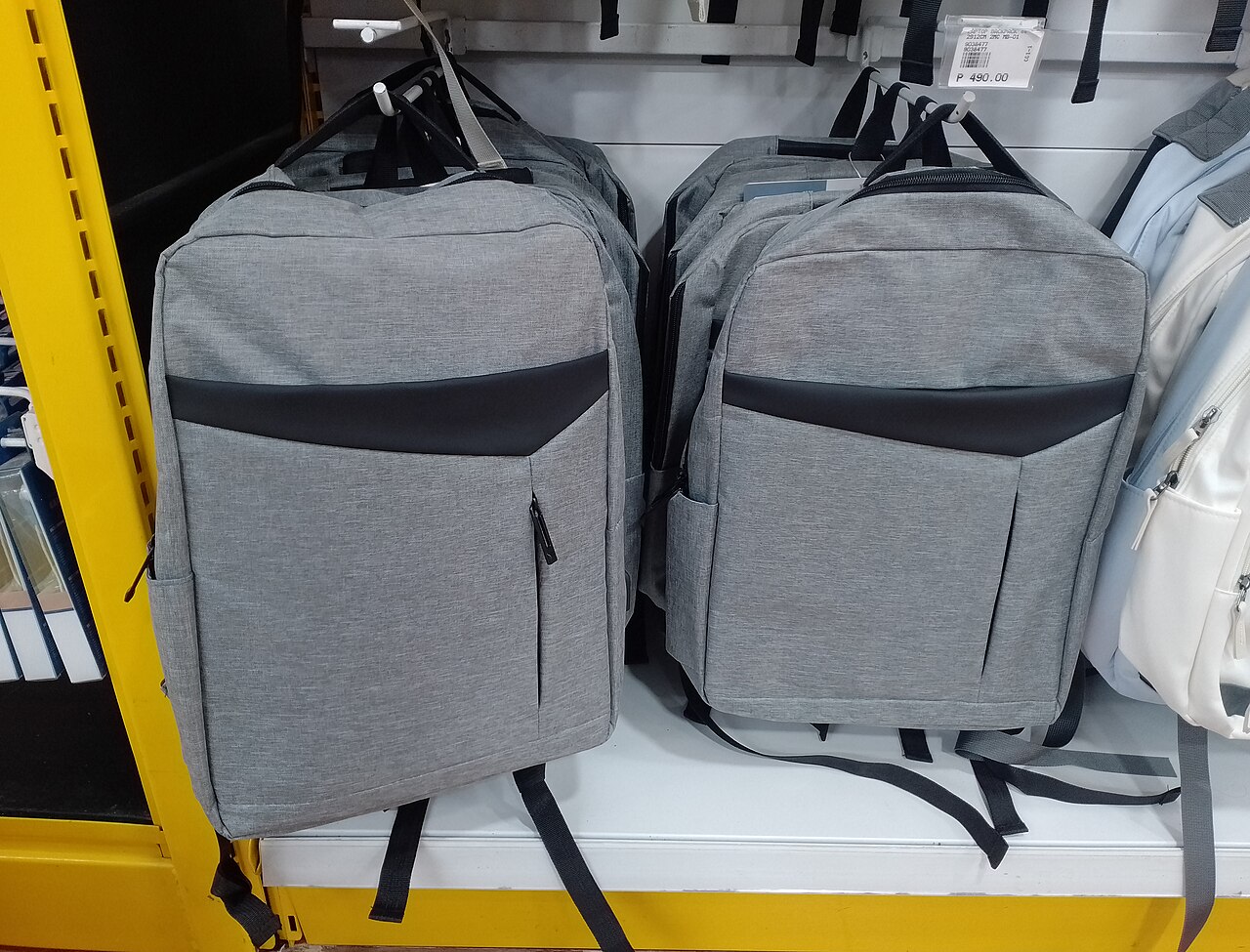
When you narrow the field, compare models on sleeve suspension, foam density, base reinforcement and harness rather than on pocket count. Lists such as this best North Face laptop backpack roundup are useful because they tend to focus on those structural points.
Weather and daily abuse
A water-resistant coating on the face fabric handles light rain. For anything more, a rain cover or a bag with taped seams is the only reliable answer. Remember that the top of the bag collects water first, so a well-sealed top zip matters as much as the fabric.
Shoulder season commuting exposes the weak points fast: a strap that was comfortable in winter becomes abrasive in a t-shirt, and a bag that sat behind a car seat all day behaves differently on a crowded train. Test any candidate with the load you actually carry, not with the empty shell in the shop window.
The short checklist
Suspended sleeve, dense foam, laptop close to your spine, lockable zippers, reinforced base, correct capacity and a harness that fits your torso. Get those seven right and the bag will outlast two laptops.
Weight, balance and what your shoulders actually feel
A 16-inch laptop and its charger usually weigh between two and two and a half kilograms. That is not heavy on its own, but carried on one shoulder for forty minutes it becomes a real load, which is why two padded straps used together matter more than any feature on the bag.
Balance is the second half of the equation. A bag packed with the laptop flat against your back and everything else forward of it wants to swing backward, so the shoulder straps do extra work. Keep the laptop as close to the spine as the sleeve allows and put soft, light items in front, and the whole bag settles.
Materials that survive a daily commute
Look for 600-denier or heavier polyester or nylon on the body, a coated or double-layer base, and stitching that is dense enough that you cannot easily push a needle between two stitches. Lighter 300-denier fabrics are fine for a bag that lives in an office, and they will wear through within a year on a bag that rides the subway twice a day.
Zipper quality is the other long-term variable. A number 8 or number 10 coil zipper on the main compartment will outlast three number 5 zippers, and a zipper with a metal slider running on a plastic coil is the combination that usually fails first at the corners where the bag bends.
How to test before you buy online
If you cannot handle the bag, read the return policy before the specification sheet. A bag that looks right on paper can sit wrong on your torso, and the only real test is loading it and walking. Reputable sellers allow returns within thirty days; if a listing does not, the risk is yours.