



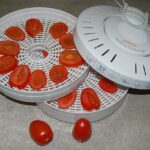


A food dehydrator uses very little power compared with an oven, and that is the argument people use to justify running one for twelve hours. The argument is only half true: the machine is efficient, but how you load it and where you put it decides whether a batch takes six hours or sixteen, and that difference is the real energy cost.
Why drying time varies so much
Water has to leave the food and be carried away by air. Anything that slows that movement adds hours. Overloading trays, stacking trays too close, drying in a cold room or using a machine with weak airflow all add time, and time is what the heater is actually consuming.
A batch that should take eight hours and takes sixteen has used twice the electricity for the same result, which erases the efficiency advantage over an oven entirely.
Cut size and uniformity
Uniform slices dry uniformly. A tray with thick and thin pieces finishes unevenly, and you either over-dry the thin ones or leave the thick ones damp. A mandoline or a sharp knife and a ruler solves this faster than any machine feature.
Thinner is faster, but too thin and the food sticks and shatters. Three to five millimetres is the practical range for most fruit and vegetables.
Loading the trays properly
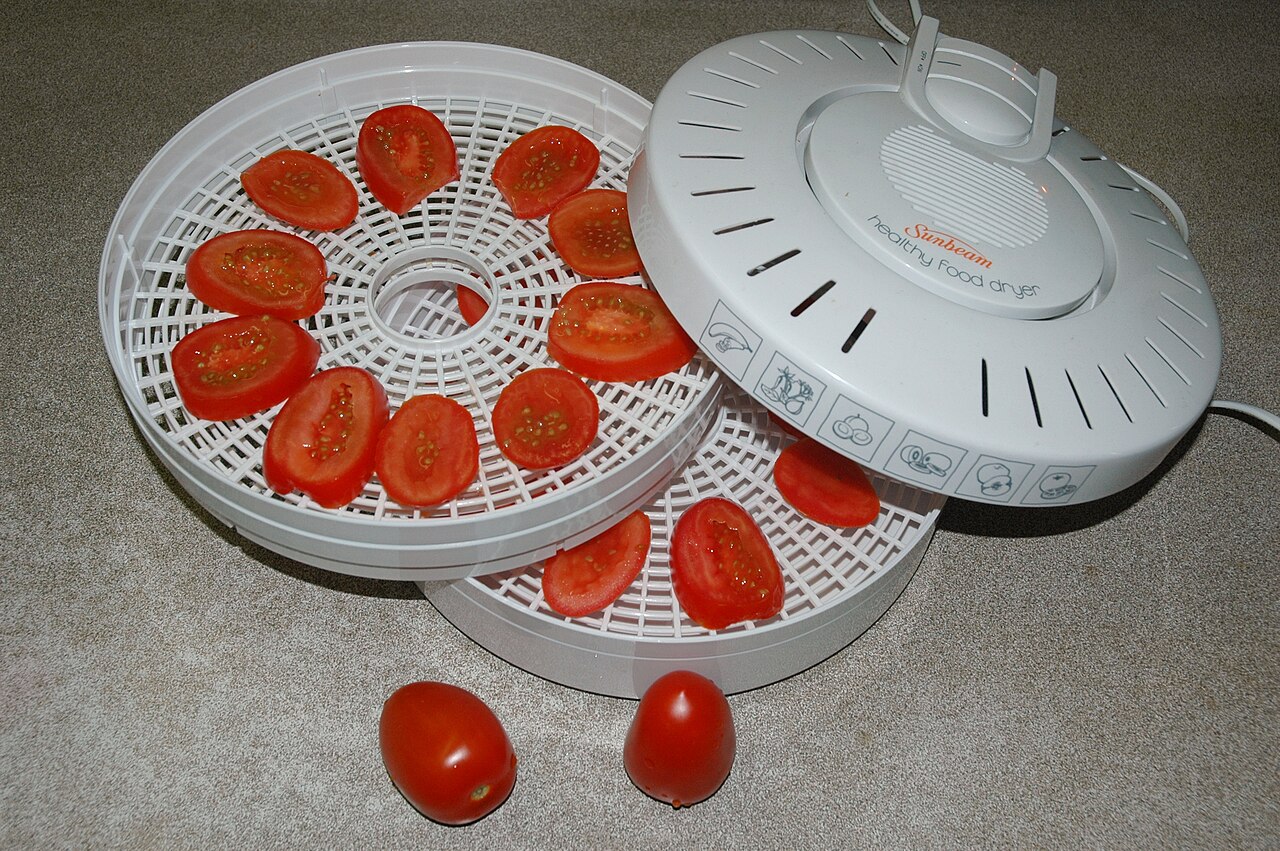
Leave gaps between pieces. Crowding reduces airflow and creates damp pockets, and the pieces touching each other dry slowest and spoil first.
Rotate trays top to bottom halfway through. Even a good machine dries the bottom tray faster, and rotating halves the difference.
Pre-treatment that saves hours
Blanching vegetables for a couple of minutes before drying shortens drying time and improves texture on rehydration. It also deactivates enzymes that cause browning and off flavours, which is the difference between dried food that keeps for a year and dried food that tastes stale in a month.
Citrus dip for fruit does the same for colour, and it costs almost nothing.
Room temperature and placement
A dehydrator in a cold utility room works harder than one in a warm kitchen. The machine draws in ambient air, so every degree below room temperature is time added. Placing it near a radiator is a bad idea for food safety, but placing it in a warm, dry room is sensible.
Do not put it in a cupboard or a tight corner where the exhaust air recirculates. The humid air has to go somewhere, and if it goes back into the intake, the food never dries.
Batch size and the efficiency trap
Running a full machine is far more efficient per kilogram than running a half-full one, because the heater and fan cost is fixed. One full batch uses less energy than two half batches for the same amount of food.
The practical consequence is to plan drying around a full load: dry several things at once that share a temperature, rather than running the machine for a single small batch every weekend.
What not to dry together
Strong-smelling items transfer flavour. Onions and fruit in the same batch produce fruit that tastes of onion. Meat should never share a batch with anything eaten raw, for obvious reasons.
Group by temperature and by aroma, and the machine runs fewer hours overall.
Cleaning and the cost of a dirty machine
A tray with dried residue blocks airflow and lengthens every subsequent batch. Cleaning takes five minutes and saves hours over a season.
If you want a practical routine, this guide on how to use a food dehydrator covers the loading and rotation sequence that most manuals leave out, and it is worth following for the first few batches until the rhythm is familiar.
Storage after drying
Food must be completely cool before it is sealed, or condensation forms inside the jar and undoes the whole batch. Condition dried food in a sealed container for a week, shaking daily, so that any remaining moisture equalises across the pieces rather than sitting in one spot.
When to stop drying
Stop when a piece bends rather than snaps for fruit leathers and snaps cleanly for vegetables. Jerky should crack but not crumble. Over-drying wastes energy and produces food that is unpleasant to eat.
Storage after drying
Food must be completely cool before it is sealed, or condensation forms inside the jar and undoes the whole batch. Condition dried food in a sealed container for a week, shaking it daily, so that any remaining moisture equalises across the pieces rather than pooling against the glass.
When to stop drying
Stop when a piece of fruit bends rather than snaps, and when vegetables snap cleanly instead of flexing. Jerky should crack but not crumble. Over-drying wastes energy and produces food that is unpleasant to eat, which is the opposite of what the machine is for.
What actually uses the energy
The heater and the fan run constantly while the machine is on, so the energy cost is almost entirely a function of time. That is why every mistake that adds hours, crowding, thick slices, a cold room, a dirty tray, costs more than the purchase price difference between a cheap machine and a good one.
Keeping a log for the first few batches is the fastest way to find the pattern. Once you know that a full tray of apple rings takes seven hours in your machine and nine in winter, planning becomes trivial and the machine stops running overnight by accident.
Which foods are actually worth drying
Herbs, tomatoes, apple rings and jerky are worth the electricity. High-water vegetables such as cucumber and lettuce are not: they take many hours and rehydrate poorly. Drying is most efficient when it preserves something you would otherwise waste, which is both the economic and the practical argument.
Starting small
If you are new to drying food, begin with apple rings and herbs. Both are forgiving, both show you within a batch whether your slices are even and your trays crowded, and neither wastes much if the first attempt is uneven. Meat can wait until the rhythm is familiar, because a failed jerky batch is expensive and unpleasant.