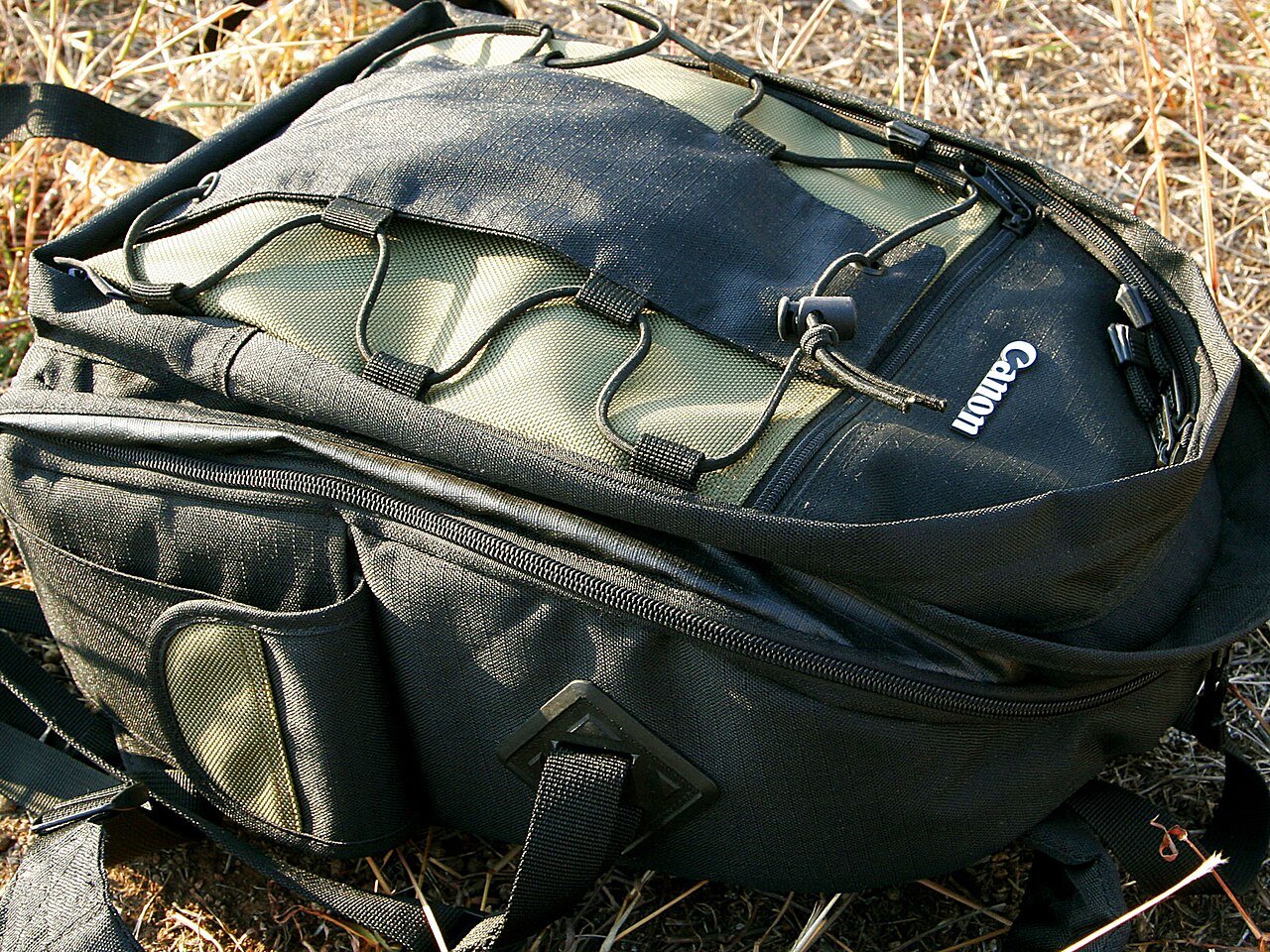










Canvas and nylon backpacks are usually compared on looks, which is the least useful dimension. The two materials fail differently, age differently and suit different kinds of use, and the right choice depends on how often the bag gets wet and how long you expect to keep it.
How each material ages
Cotton canvas starts stiff and softens with use. It develops a patina, it fades unevenly in a way most people find attractive, and it can be patched invisibly with a piece of matching fabric and a needle. A well-made canvas bag at ten years old looks used rather than worn out.
Nylon and polyester start flexible and stay flexible. They resist abrasion better per gram, they do not absorb water, and they are much harder to repair invisibly. A nylon bag at ten years old usually looks either nearly new or clearly damaged, with little in between.
Weight for the same volume
For the same capacity, a canvas bag weighs three to five hundred grams more than a nylon one. That difference matters on a long walk and almost not at all on a commute. It matters more than the material’s durability for anyone who carries the bag all day.
Water and weather
Untreated canvas absorbs water and becomes heavy. Waxed canvas sheds rain but transfers wax onto clothing and cannot be washed. Nylon with a polyurethane coating sheds water and dries quickly, and the coating eventually delaminates after years of folding.
If you walk or cycle in wet weather, nylon is the practical answer. If you carry the bag mostly between buildings, canvas is fine and looks better doing it.
Abrasion and the places bags fail
Nylon wins on abrasion resistance per unit weight. Canvas wins on thickness: a 12-ounce canvas is physically thicker than the coated nylon used on most bags, and thickness resists punctures that a thin nylon will not.
The failure points are the same for both: the base corners, the strap anchors and the zipper tape. A well-made bag in either material outlasts a poorly made one in the other.
Repair and longevity
Canvas can be patched, re-stitched and re-waxed. A torn seam is a twenty-minute job with a needle and heavy thread. Nylon requires a patch or a specialist repair, and a torn coating cannot be restored at home.
That repairability is the strongest argument for canvas if longevity is the goal. A bag you can fix is a bag you keep.
Cost and value
At the same price, a canvas bag usually has better hardware and thicker fabric, because the material is cheaper to source. A nylon bag at that price is paying for coating technology and lighter weight rather than for stitching quality.
Which means the comparison often resolves to this: canvas buys you durability you can repair, nylon buys you lightness and weather resistance you cannot. If you want to see how the two compare in real models, this canvas backpack shortlist is a reasonable reference point for fabric weight and hardware quality.
How to check fabric quality quickly
For canvas, ask for the weight in ounces. Anything under ten ounces is a light bag for light use; twelve is the practical daily standard; sixteen and above is workwear territory. For nylon, ask for the denier: 600D is the usual minimum for a bag that will be set down on concrete.
Then look at the seams. Both materials are only as good as the stitching holding them, and a double-stitched seam with bar tacks at the load points matters more than the fibre content.
Care and cleaning
Canvas should be spot cleaned and air dried, never tumble dried. Nylon can be wiped and rinsed, but detergent strips the coating, so mild soap and a cool rinse is the limit. Neither material benefits from a washing machine, whatever the label suggests.
What the bag looks like in year five
This is the least technical comparison and often the one that decides it. A canvas bag in year five has soft edges, a faded panel where the sun hits it and a patina that people either love or find scruffy. A nylon bag in year five is either intact and still shiny, or it has a delaminated panel and a frayed zip tape that cannot be repaired to look like anything.
If you want a bag that ages visibly and well, canvas is the material. If you want a bag that either works or is replaced, nylon is.
Which to choose
Choose canvas for a daily commuter bag in a dry climate, for a bag you intend to keep for a decade, and for anything you want to repair rather than replace. Choose nylon for wet climates, long walks, cycle commuting and any trip where weight in the bag matters.
The two are not competing for the same buyer, which is why most people who own both end up using each for a different job rather than deciding between them.
How the two age in a hot car and a cold hallway
Temperature swings are the quiet killer of coated nylon. A bag left in a car in summer and in an unheated hallway in winter goes through hundreds of expansion cycles, and the coating eventually cracks along the folds. Canvas tolerates the same treatment without visible damage because cotton fibres flex rather than crack. If the bag lives in a car, that alone is a reason to prefer canvas.