









The North Face has been making packs long enough that the range has become confusing. There are trail packs, city packs, technical daypacks and a long list of collaborations, and they overlap heavily on the shelf. If you are buying for a commute rather than a summit, the decision comes down to four things: capacity, harness, laptop protection and how the bag handles weather.
Capacity: match the bag to the day, not the trip
Most commuters overbuy. A 20- to 25-liter pack swallows a 15-inch laptop, a lunch box, a charger pouch and a light jacket. Above 30 liters the bag stops behaving like a commuter pack and starts swinging when it is half empty, because there is no compression to take up the slack.
If you occasionally need more room, look for side compression straps rather than a bigger bag. They let a 26-liter pack carry a light load without collapsing into a sack.
Harness fit matters more than the logo
Shoulder straps should curve around the chest rather than cutting across the collarbone, and they should be wide enough that a loaded bag does not dig in after twenty minutes. A sternum strap is not a hiking accessory; on a bike commute it is what stops the bag sliding off one shoulder at every turn.
A padded, ventilated back panel is worth having if you run warm. Foam channels move air, flat foam traps it, and on a warm platform in summer the difference is noticeable within a week.
Laptop protection is a design decision
A sleeve that hangs at the back of the bag, away from your body, puts the weight at the end of a lever. A sleeve that sits close to your spine keeps the load centered and reduces the bounce. Suspended sleeves, which keep the laptop off the base of the bag, protect against the drop that happens when you set the bag down hard.
Check the sleeve dimensions against your actual machine, including a case. A 15-inch sleeve that fits a bare laptop often will not fit the same laptop in a padded shell.
Weather and materials
Most urban North Face packs use a coated nylon or polyester face fabric with a water-resistant finish. That handles drizzle and road spray; it does not handle an hour of steady rain, and zippers are usually the first point of entry.
If you ride in wet weather, either pick a model with water-resistant zippers or keep a lightweight rain cover in the bottom pocket. A cover weighs almost nothing and turns a shower from a laptop emergency into a non-event.
Organization that earns its space
Two or three well-placed pockets are more useful than eight shallow ones. A front zip pocket for a wallet and keys, a side pocket that actually holds a one-liter bottle, and a fleece-lined top pocket for glasses or a phone cover the realistic daily needs.
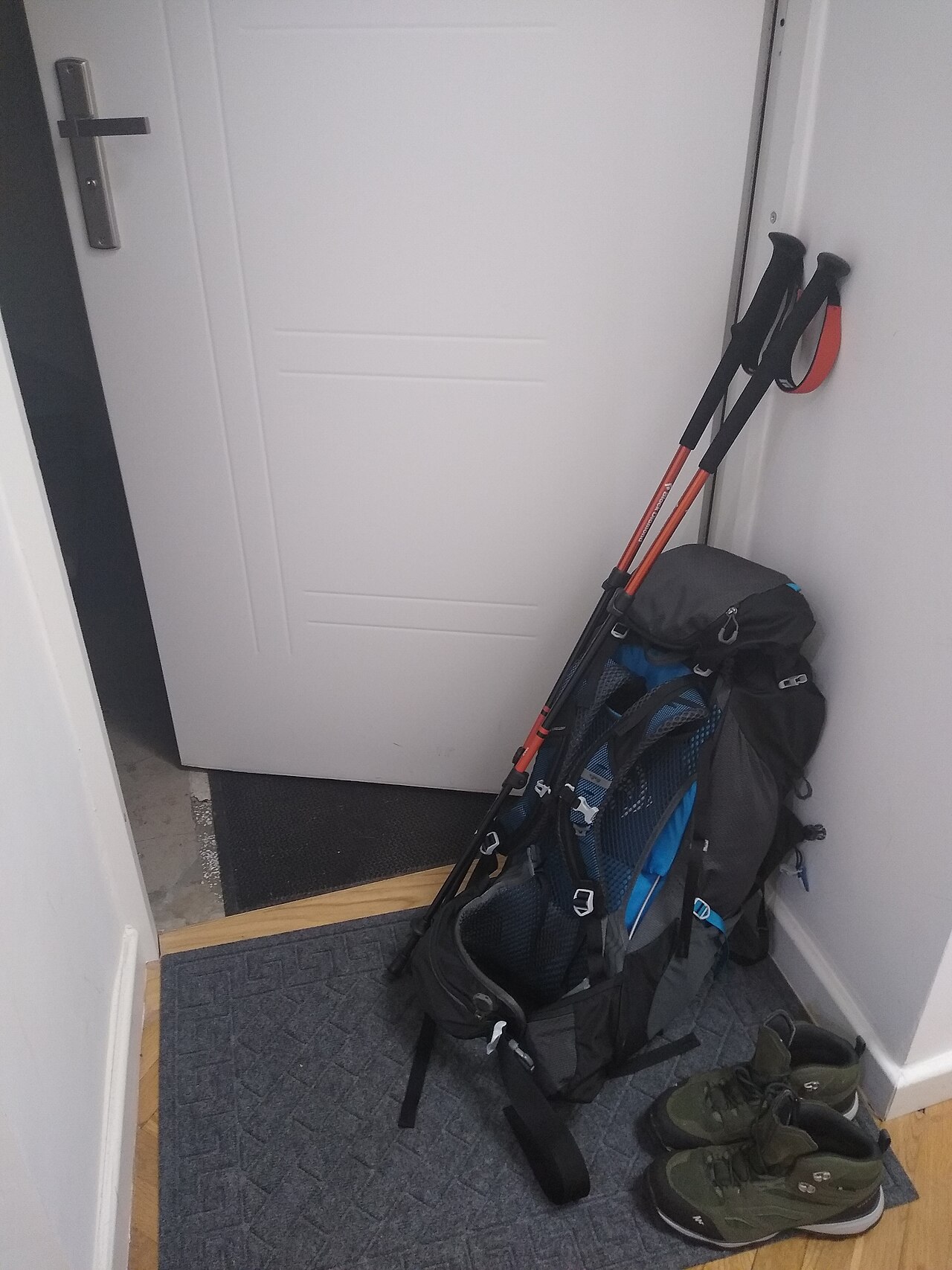
External daisy chains, helmet loops and trekking pole attachments look purposeful and mostly go unused on a commute. They do not hurt, but they should not drive the decision.
Durability and repair
Look at the base panel first. A reinforced base is what keeps a commuting bag alive through years of being set down on concrete. Check the bar tacks where the straps attach and the quality of the main zipper, since a failed zipper usually ends a bag”s life earlier than worn fabric does.
North Face packs carry a lifetime warranty in most markets, which changes the economics of buying a slightly more expensive model. A bag that gets repaired instead of replaced is often the cheaper option over five years.
Pay attention to the fabric denier as well. Higher denier nylon resists abrasion better but feels stiffer on the body, while lighter fabrics stay flexible and wear through faster at the base and the corners. If your commute involves crowded trains where the bag rubs against seats and doors, the heavier fabric is the better long-term buy.
Comparing specific models
Model names change every couple of seasons, and the same name can refer to quite different bags across regions. Rather than chasing a name, compare shortlisted packs on capacity, sleeve size, harness padding and warranty. A curated best North Face backpack comparison is a faster way to do that than reading spec sheets one at a time.
Fit check before you commit
Load the bag with about five kilograms in the store, put it on, and walk for two minutes. If a strap edge digs into your shoulder or the bag pulls backwards, no amount of pocket organization will fix it. Torso length, not height, decides whether a pack sits correctly, and the same pack can feel completely different on two people of similar size.
What to skip
Skip hydration sleeves with no external access, skip side straps that will not compress an empty bag, and skip any model where the laptop sleeve is not padded on the face that touches your back. Skip, too, the temptation to buy a hiking pack for the office: the wider hip belt and longer back panel are designed for a load you are not carrying.
The bottom line
For a commute, a 20- to 26-liter North Face pack with a suspended laptop sleeve, a ventilated back panel and a sternum strap covers almost every case. Spend the extra on the harness and the base panel, skip the features you will never use, and keep a rain cover in the bag.
Straps, sternum and the details that decide comfort
A surprising amount of commuting comfort comes down to three straps. The shoulder straps should be at least two inches wide where they cross the collarbone, because that is where a narrow strap concentrates load and where a two-kilogram bag starts to feel like five by the end of the walk.
The sternum strap should be adjustable along a rail rather than fixed in one position. On a small torso it sits too low, on a broad chest too high, and a sternum strap in the wrong place is worse than none because it pulls the shoulder straps inward at an angle that rubs the neck.
The hip belt, if there is one, should be removable. A commuting pack rarely carries enough weight to justify it, and a stowed hip belt that cannot come off becomes a lump against your back all day. Removable belts are the sign of a pack designed for both trains and trails.
Packing the bag so it carries lighter
Put the heaviest single item flat against your back and high up between the shoulder blades. In practice that means the laptop goes in the sleeve nearest your spine, the charger and battery bank go above it rather than at the bottom, and the water bottle goes in a side pocket where its weight stays close to your center line.
Bulk that moves is what makes a bag feel heavy. A jacket folded rather than stuffed, a lunch box that fits its pocket exactly, and a small pouch for cables so they do not migrate to the base all reduce the pendulum effect that makes a loaded pack swing as you walk.
When to replace rather than repair
Fabric wear, a broken buckle and a split seam are all repairable and usually cheap to fix. A collapsed back panel, a zipper tape that has torn away from the bag body, or a base that has worn through into the lining are the three cases where replacement makes more sense than repair.