






Track saw and table saw both cut sheet goods accurately, and both are sold as the centre of a small workshop. The honest comparison is not about which is more accurate but about which set of compromises fits a room with one bench and no spare wall.
How each saw works
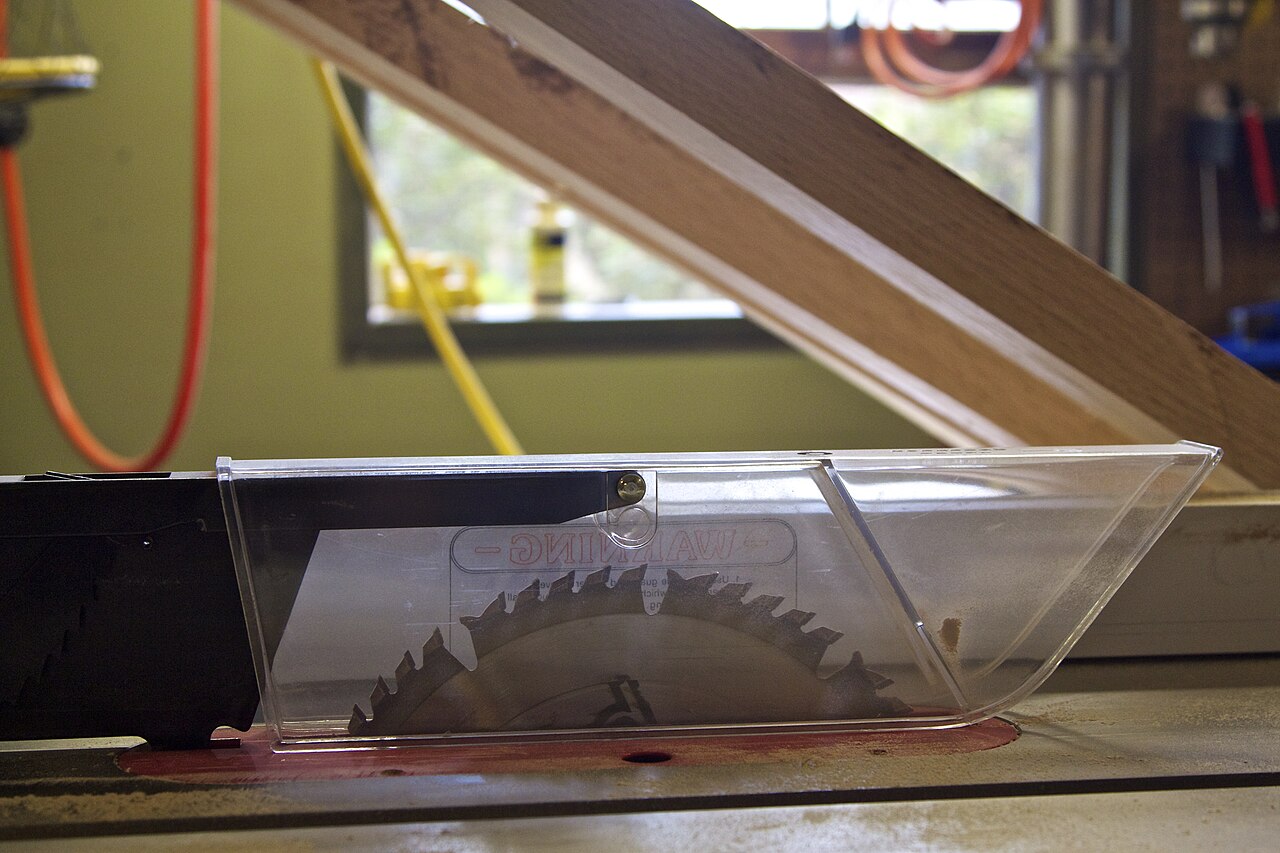
A table saw holds the workpiece flat on a table and pushes it past a fixed blade. It references the fence, so repeat rips are dead simple, and it handles long boards well because the table supports them.
A track saw carries the saw to the material on a guide rail. The rail references the cut, not the fence, so the first cut is as accurate as the last, and long sheet goods are broken down on the floor or on a pair of trestles.
Space: the deciding factor
A table saw needs infeed and outfeed clearance roughly equal to the length of the material. Cutting a 2.4 metre sheet on a table saw in a small room is an exercise in walking around furniture. Even a compact job-site saw needs about three metres of clear run for full sheets.
A track saw needs the length of the rail plus a little. Two rails joined cover a full sheet, and the whole setup hangs on a wall when not in use. In a single-car garage, that difference is decisive.
Repeatability versus flexibility
The table saw wins on repeat rips. Set the fence once and every strip is identical, which is exactly what cabinet and shelving work needs. Narrow rips under 50mm are awkward on a track saw because the rail cannot be clamped to a narrow offcut.
The track saw wins on breaking down sheet goods, on site work and on any cut where the material is too big or too awkward to control past a blade. It also cuts faster in the middle of a sheet with no clearance issues at all.
Safety in a small shop
Kickback is the table saw risk, and it is worst on narrow rips without a riving knife or a short fence. A track saw removes kickback almost entirely because the saw is held on a rail and the material does not move.
The track saw brings its own risks: a rail that is not clamped can slide, and a plunge cut started in the wrong place is hard to stop. Both are manageable with clamps and a consistent routine.
Cost and what you actually get
A decent job-site table saw costs about the same as a track saw with one rail. The difference is that the table saw includes a fence and a stand while the track saw expects you to buy a second rail, clamps and a sacrificial sheet to cut on.
If you compare total cost for the first year, the table saw is usually cheaper. If you compare total cost per usable square metre of workshop, the track saw frequently wins because it does not eat floor space.
Which to buy first
Buy the track saw first if your work is sheet goods, cabinets, built-ins or site work, and your space is tight. Buy the table saw first if your work is ripping solid timber to width, repeatably, and you have the clearance to feed it.
This track saw vs table saw comparison is worth reading before you commit, because the right answer changes completely depending on whether your next project is a wardrobe or a set of shelves.
Living with one and adding the other later
Most small shops end up with both, bought in the order dictated by the first project. The common path is a track saw for sheet goods, then a compact table saw once solid timber work starts. Buying the second one used is entirely reasonable, since a table saw is a simple machine and the fence is the only part that wears.
If you can only ever own one, choose by material rather than by brand. Sheet goods and site work point to the track saw; solid timber and repeated rips point to the table saw.
Dust and noise
Both saws produce a lot of dust and the track saw is easier to connect to extraction because the port is close to the blade. A table saw without a proper hood spreads dust across the room, which in a shared garage is the difference between being allowed to work and not.
What about a circular saw and a straight edge
A circular saw with a clamped straight edge does most of what a track saw does for a fraction of the price, and it is worth saying plainly because the track saw premium is substantial. What you lose is the anti-splinter strip, the non-slip base and the plunge mechanism. On plywood for shop furniture, that loss does not matter. On veneered cabinet panels where a splintered edge ruins the job, the track saw earns its price on the first sheet.
What you gain with a circular saw is portability and a lower entry cost, which makes it the sensible first purchase for anyone who is not yet sure how much sheet goods work they will do.
Space planning in practice
Measure the longest thing you expect to cut and add two metres. That number tells you whether a table saw is viable in your room. If the answer is no, stop comparing specifications and buy the track saw, because the better tool you cannot feed is worse than the adequate tool you can.
Store the rail vertically on a wall and the track saw becomes a shelf of its own, which in a small shop is worth more than any feature on the specification sheet.
Blade choice for both
A 24-tooth blade on a table saw rips fast and leaves a rougher edge; a 40-tooth combination blade is the practical single-blade compromise for a small shop. A track saw usually ships with a 48-tooth blade that leaves a clean edge in plywood and melamine, which is exactly the material it is designed for.


